Silicone vs. Acrylic vs. Polyurethane Roof Coatings — What's the Difference?
Three Coatings, Three Very Different Jobs
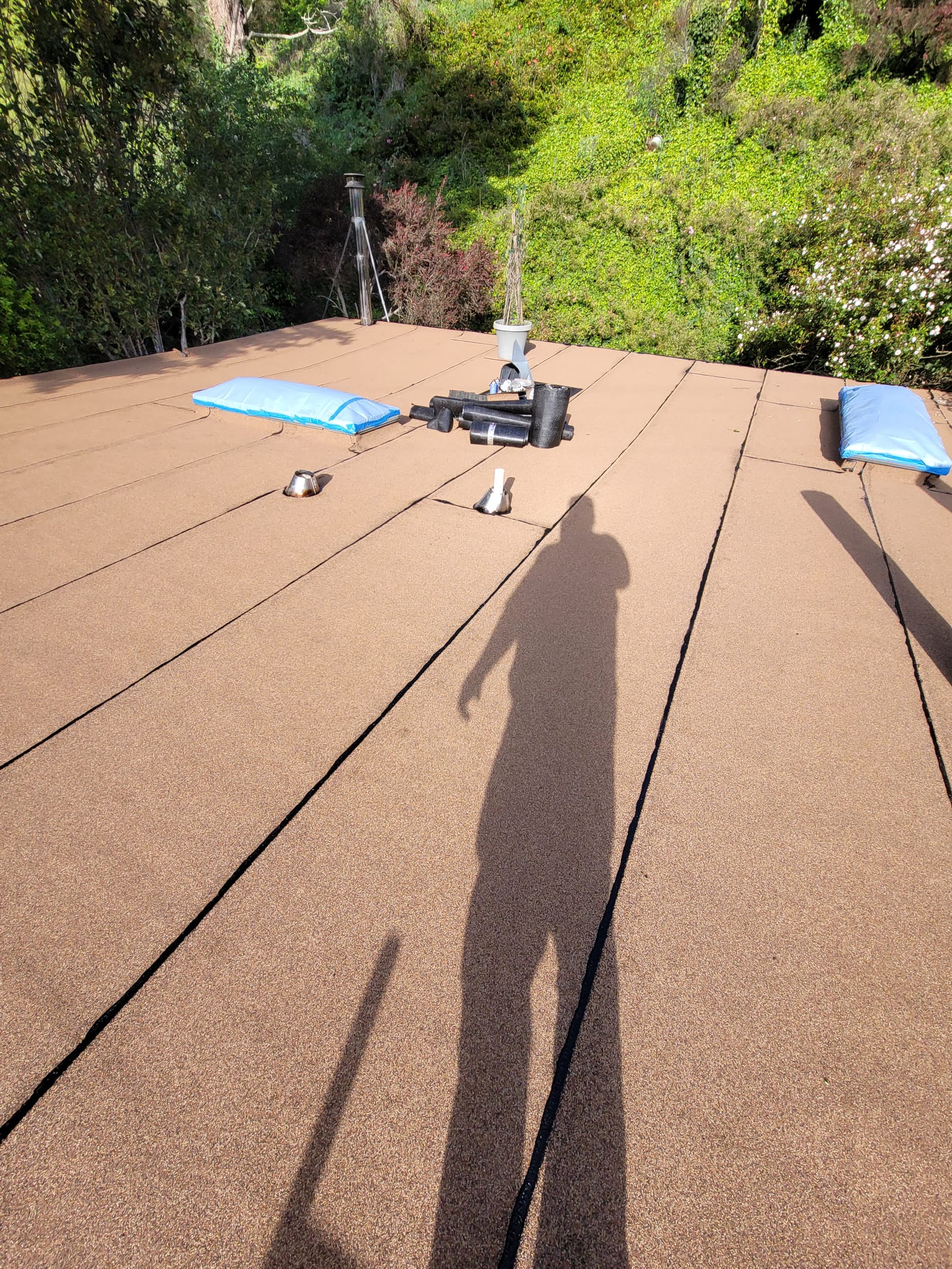
Illustrative roofing photograph from our gallery—not documentation of a specific project, location, or outcome discussed in this chapter.
Walk into any roofing supply house and you'll find buckets of white roof coating that all look about the same. On your roof, they are anything but the same. The three main families — silicone, acrylic, and polyurethane — cure differently, weather differently, handle water differently, and cost differently.
Choosing the wrong one for your building's conditions is one of the most common and expensive mistakes in roof restoration. Here's what a property manager actually needs to know about each.
Silicone Coatings: The Ponding-Water Champion
Silicone is a moisture-cure coating — it actually uses humidity in the air to cure. Once cured, it is essentially unaffected by standing water. That single property makes it the default choice for flat commercial roofs, because almost every flat roof ponds somewhere.
Strengths of silicone:
- Withstands permanent ponding water without degrading
- Exceptional UV resistance — it doesn't chalk away like acrylics
- Stays flexible across temperature extremes
- High solids content, so what you spray is mostly what stays on the roof
- Typically lasts 15–30 years before recoating
The tradeoffs: silicone costs more per gallon than acrylic, its surface holds dirt more readily (which slightly reduces reflectivity over time), and once a roof is coated in silicone, future recoats generally must also be silicone — other coatings won't bond to it.
Acrylic Coatings: Economical, But Water Is the Enemy
Acrylics are water-based coatings, which makes them inexpensive and easy to apply. On steep or well-draining roofs in dry climates, they can perform respectably.
The critical weakness: acrylics are water-based, and ponding water slowly re-softens and erodes them. On a flat commercial roof with any drainage issues — which describes most flat roofs we inspect — acrylic coatings fail early, often within a few years, right where the water sits. They also lose thickness to UV weathering over time and cannot be applied in cold or wet conditions.
Acrylic has a legitimate place on sloped metal roofs with excellent drainage. On flat roofs that pond, it is usually the wrong answer no matter how attractive the price looks.
Polyurethane Coatings: The Impact Specialist
Polyurethane coatings are the toughest of the three against physical abuse — foot traffic, hail, dropped tools, and mechanical wear. They're commonly used as a base coat over spray polyurethane foam (SPF) roofs, or in high-traffic zones around rooftop equipment.
Their weaknesses: aromatic polyurethanes degrade in UV and need a UV-stable topcoat, they're more difficult to apply, and they have stronger odors during installation. In practice, polyurethane is usually part of a system — for example, a polyurethane base for toughness with a silicone topcoat for UV and ponding resistance — rather than a standalone solution.
Which One Does Your Roof Need?
A quick field guide:
- Flat roof with any ponding: silicone, almost always
- Sloped metal roof, good drainage, budget-driven: acrylic can work
- SPF foam roof or high-traffic areas: polyurethane base, silicone top
- Hot Central Valley sun exposure: silicone's UV stability matters most
- Coastal fog-belt buildings: silicone's moisture tolerance is an advantage
Climate matters here. Buildings in Modesto and Stockton see intense summer UV that punishes acrylics, while properties in South San Francisco live with fog moisture most mornings — both conditions favor silicone.
Why McCurdy Leads With Silicone
After four decades and over 1,000,000 square feet coated, McCurdy Coatings standardized on high-solids silicone systems for flat commercial roofs because they're the only coating family we can confidently back with No Dollar Limit warranties of 10, 15, 20, 25, and even 30 years. Owners also typically see 15–25% cooling cost reductions from the reflective white surface.
McCurdy Pro Tip
Ask any contractor proposing a coating one question: "How does this product handle ponding water, and will the warranty cover ponded areas?" If the answer involves hedging, you're probably being quoted an acrylic on a roof that needs silicone. Book a free roof audit and we'll tell you exactly which system fits your roof — and show you where it ponds.
Apply this to your building
Use this guide to prepare questions, not to self-certify a roof. Suitability, scope and warranty terms depend on the inspected roof and written system requirements.