How Cool Roofs Work: Solar Reflectance, Thermal Emittance, and SRI Explained
The Science Behind the White Roof — In Plain English
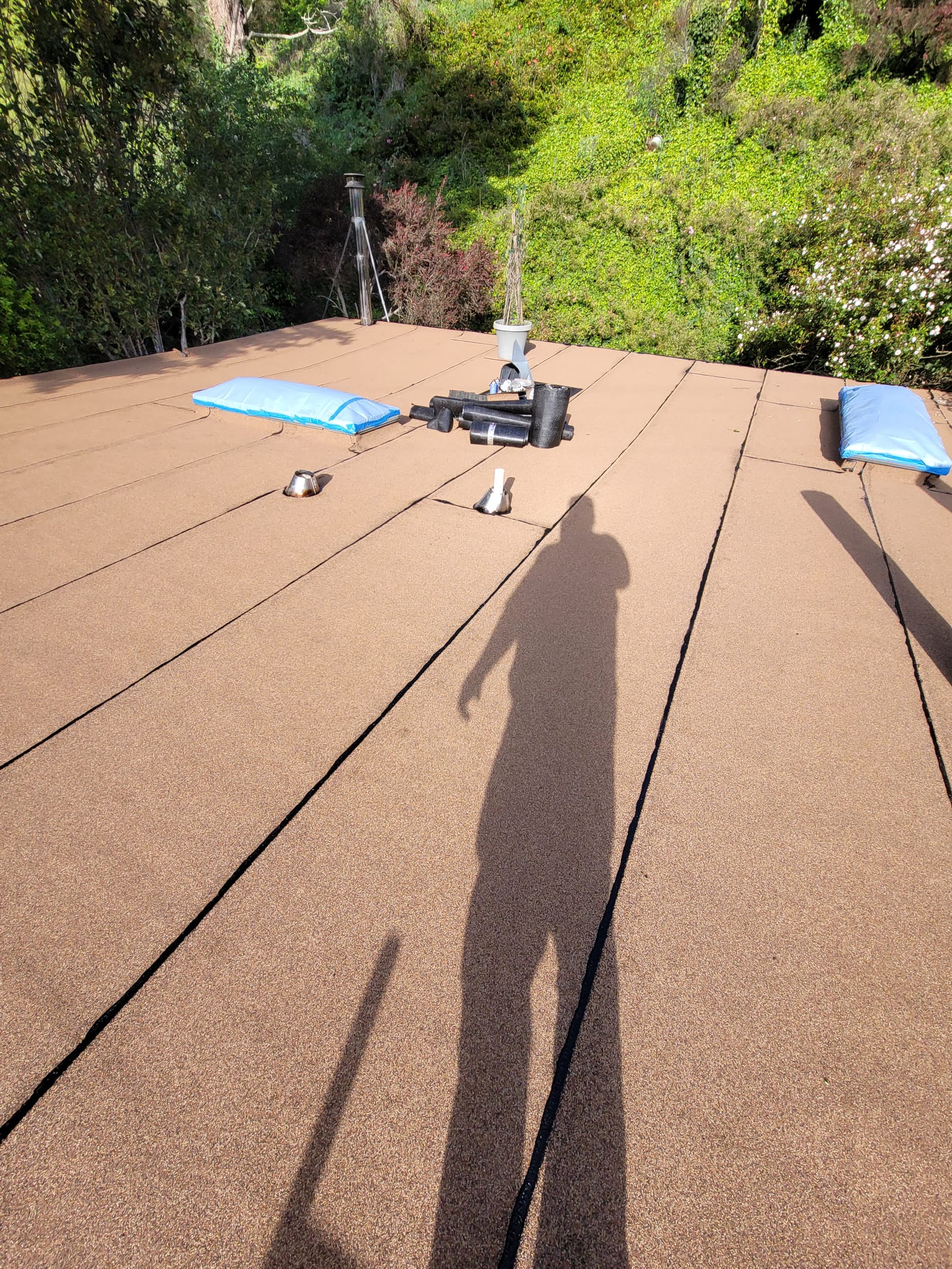
Illustrative roofing photograph from our gallery—not documentation of a specific project, location, or outcome discussed in this chapter.
On a 95°F summer afternoon in the Central Valley, a black commercial roof can reach 170°F or more. A white reflective roof on the identical building next door might measure 110°F. That 50–60 degree difference is not marketing — it's measurable physics, and it flows directly into your cooling bill.
Understanding why comes down to three numbers that appear on every cool roof product: solar reflectance, thermal emittance, and SRI. Here's what each one actually means.
Solar Reflectance: How Much Sunlight Bounces Off
Solar reflectance (sometimes called albedo) measures the fraction of the sun's energy a surface reflects rather than absorbs, on a scale from 0 to 1.
- A black built-up roof might reflect only 0.05 — it absorbs 95% of solar energy as heat
- Weathered gray membranes typically land around 0.20–0.40
- A fresh white silicone coating can reflect 0.80 or more — sending 80%+ of solar energy back to the sky
Every unit of energy reflected is energy that never becomes heat in your roof assembly, never migrates through the insulation, and never has to be removed by your air conditioning.
Thermal Emittance: How Well the Roof Sheds Absorbed Heat
No surface reflects everything. Thermal emittance (also 0 to 1) measures how efficiently a surface re-radiates the heat it does absorb back into the atmosphere, instead of holding it.
Most coatings and membranes have high emittance — 0.85 or better. The notable exception is bare metal: a shiny unpainted metal roof may reflect well but has very low emittance, so it traps absorbed heat and stays surprisingly hot. This is why coating a metal roof often produces dramatic temperature improvements.
SRI: The One Number That Combines Both
The Solar Reflectance Index (SRI) rolls reflectance and emittance into a single score, calibrated so standard black is 0 and standard white is 100. High-performance white coatings can score above 100.
SRI is the number building codes care about. When California's Title 24 sets cool roof requirements for low-slope commercial roofs, it does so in terms of aged reflectance, emittance, and SRI values — "aged" meaning after three years of real-world weathering, not fresh out of the bucket.
What This Means for Your Building
The practical effects of a high-SRI roof:
- Cooling savings — McCurdy customers typically see 15–25% reductions in cooling costs, averaging around 20%
- Longer roof life — heat is a primary driver of membrane aging; a cooler roof ages slower
- Less thermal shock — smaller day-night temperature swings mean less expansion-contraction stress on seams and flashings
- More comfortable top floors — especially in buildings with marginal insulation
- HVAC equipment relief — rooftop units pull in cooler intake air and cycle less
The hotter your climate, the bigger the payoff. Warehouses in Tracy and Manteca, where summer highs regularly break 100°F, see the strongest returns. But even in milder Fremont, the combination of energy savings and extended roof life makes reflective coatings compelling.
Do Cool Roofs Have a Winter Penalty?
A fair question: doesn't reflecting heat cost you in winter? In California's climate, the effect is minimal. Winter days are short, the sun sits low, and commercial buildings — full of people, lights, and equipment — usually need cooling more months of the year than heating. Study after study shows the summer savings dwarf any winter penalty in climates like ours.
McCurdy Pro Tip
Reflectivity degrades as a roof gets dirty — a white roof that never gets inspected can lose a meaningful share of its reflectance to grime in a few years. A simple periodic cleaning restores most of it. When we install a silicone cool roof system, maintenance guidance is part of the package, and our NDL warranties run 10 to 30 years. Want to know what your current roof's temperature and condition look like? Book a free roof audit — we'll measure it, photograph it, and give you real numbers.
Apply this to your building
Use this guide to prepare questions, not to self-certify a roof. Suitability, scope and warranty terms depend on the inspected roof and written system requirements.