How to Tell If Your Commercial Roof Needs Replacement or Restoration
The Most Important Roofing Decision a Property Manager Will Ever Make
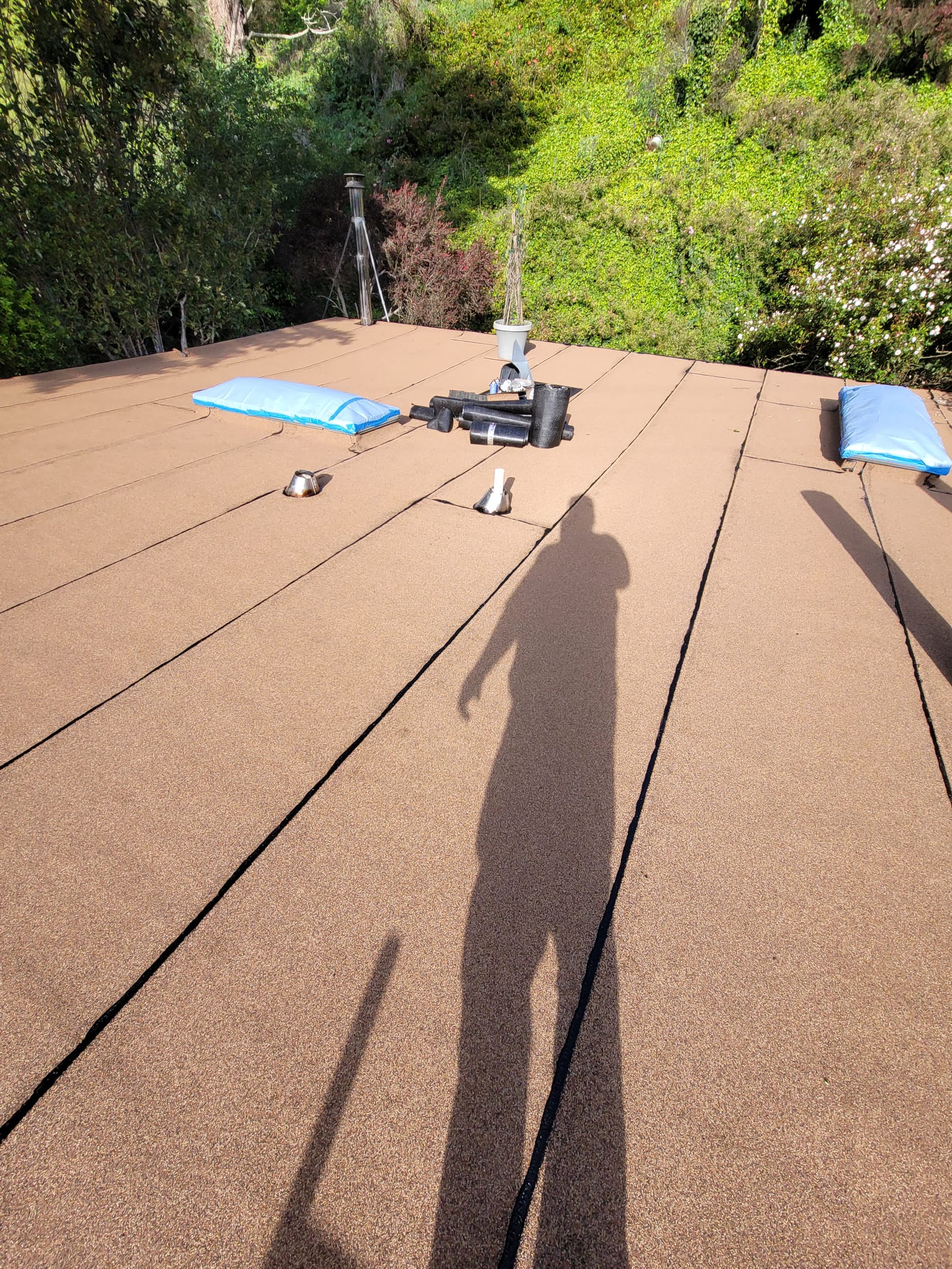
Illustrative roofing photograph from our gallery—not documentation of a specific project, location, or outcome discussed in this chapter.
If you manage a commercial building long enough, you will eventually face this question: does the roof need to be replaced, or can it be restored?
It is the single most consequential roofing decision a property manager makes, because the two paths differ enormously in cost, disruption, and timeline. A full tear-off and replacement on a mid-size commercial building can run into the hundreds of thousands of dollars and take weeks. A restoration — cleaning, repairing, and coating the existing roof — typically costs a fraction of that and can often be completed without interrupting building operations.
Here's the part most building owners never hear: a large percentage of commercial roofs that get torn off didn't actually need to be. They were restorable. The owner simply didn't know restoration was an option, or the contractor they called only sells replacements.
The Core Question: Is the Roof Sound Underneath?
Restoration works by adding a new waterproof layer — usually a fluid-applied coating — over an existing roof that is still structurally sound. That means the decision comes down to one central question: what condition is the roof underneath?
A roof is generally a strong restoration candidate when:
- The membrane is intact with no widespread splitting or deterioration
- Insulation is dry (verified by moisture survey, not guesswork)
- Leaks are localized around seams, flashings, or penetrations
- The deck shows no signs of structural damage or sagging
- Less than about 25% of the roof area needs repair before coating
A roof is usually a replacement candidate when:
- Moisture surveys show saturated insulation across large areas
- The membrane is failing broadly, not just at isolated spots
- There have been repeated leaks in many different locations
- The deck itself is deteriorating or has been damaged by long-term water intrusion
- Previous repairs cover so much of the roof that there's little original membrane left to save
Warning Signs Worth Acting On
You don't need to climb on the roof to notice early warning signs. Watch for:
- Water stains on ceiling tiles, especially ones that grow after storms
- Musty odors in top-floor spaces
- Blistering or bubbling visible from adjacent taller buildings
- Rising cooling bills, which can indicate wet insulation losing its R-value
- Ponding water that stays more than 48 hours after rain
None of these automatically mean replacement. But every one of them means the roof deserves a professional evaluation soon — small problems on commercial roofs rarely stay small.
Why the Timing Matters So Much
Restoration has a window. Catch a roof while the membrane is still fundamentally sound and you can add 10 to 20 years of service life for a fraction of replacement cost. Wait too long — until moisture has saturated the insulation and worked into the deck — and coating is no longer honest option. At that point, replacement is the only responsible recommendation.
This is why deferring a roof evaluation is one of the costliest habits in property management. The roof doesn't announce when it crosses the line from restorable to replaceable. Only an inspection with moisture testing can tell you where you stand.
How McCurdy Makes the Call
Since 1985, we've evaluated thousands of commercial roofs across the Bay Area and Central Valley — more than 10,094 completed services. Our free roof audit includes a walk of the entire roof surface, documentation of every deficiency, and an honest verdict: repair, restore, or replace.
Because McCurdy specializes in restoration, some owners assume we recommend coating everything. The opposite is true — our warranty depends on the roof underneath being sound, so we have every incentive to tell you the truth. If your roof needs replacement, we will say so. Our record of zero unresolved warranty claims exists precisely because we don't coat roofs that shouldn't be coated.
We regularly perform these evaluations for warehouse owners in Tracy, industrial facilities in Hayward, and commercial properties throughout San Jose and the greater Bay Area.
McCurdy Pro Tip
Get the evaluation before you get the leak. The best time to find out whether your roof is a restoration candidate is two years before you think you need to — while every option is still on the table and you can plan the budget on your schedule, not the weather's. Book a free roof audit and you'll know exactly where your roof stands, with photos and a written assessment, at no cost and no obligation.
Apply this to your building
Use this guide to prepare questions, not to self-certify a roof. Suitability, scope and warranty terms depend on the inspected roof and written system requirements.