Understanding Commercial Roofs in Santa Clara County
Before You Can Protect a Roof, You Need to Understand It
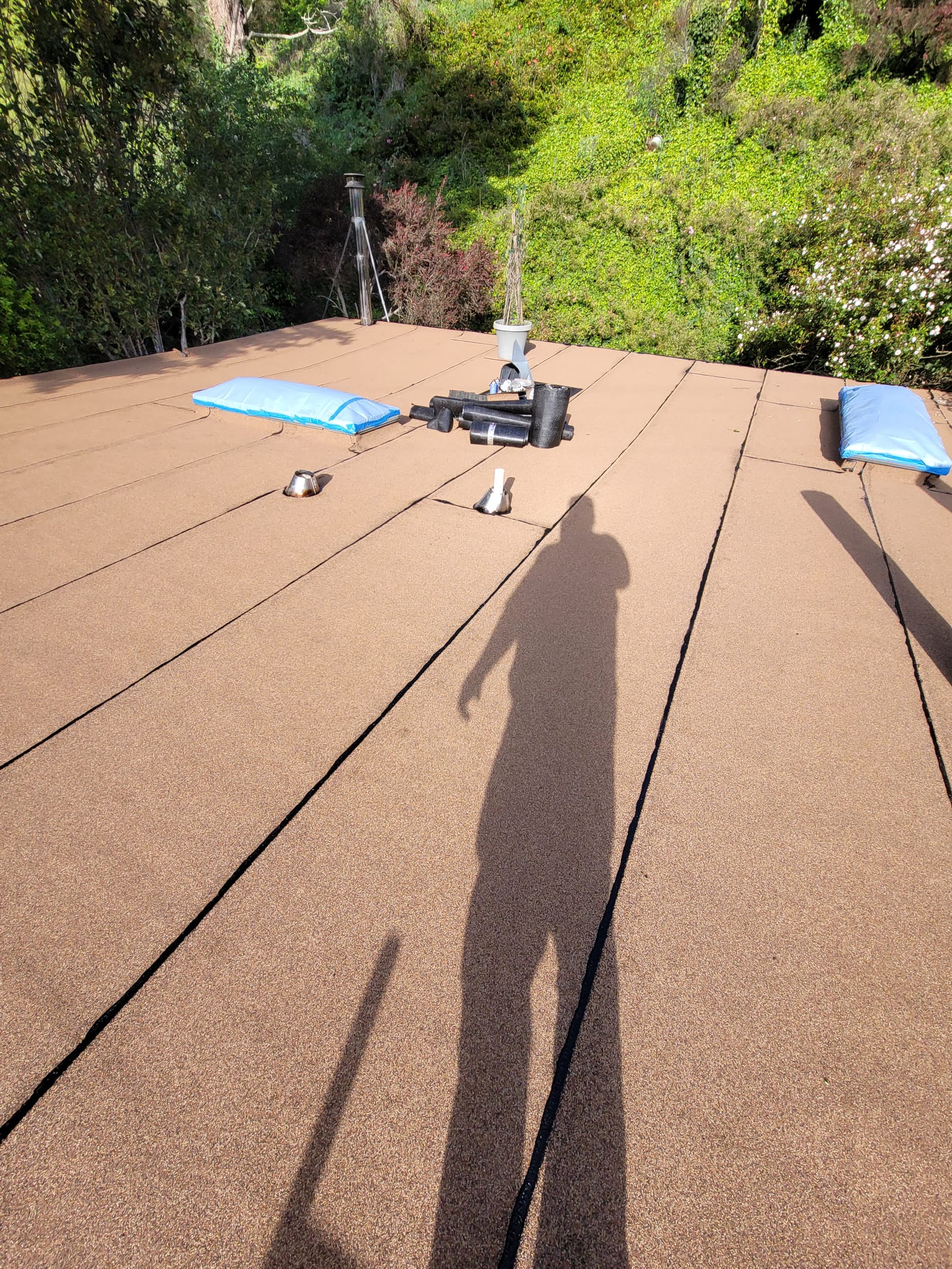
Illustrative roofing photograph from our gallery—not documentation of a specific project, location, or outcome discussed in this chapter.
One of the biggest misconceptions in commercial roofing is that every flat roof is basically the same.
From the ground, many commercial roofs look nearly identical. They appear flat, have air conditioning units, plumbing vents, skylights, and perhaps a few pipes extending above the roof surface.
In reality, two buildings sitting side by side may have completely different roofing systems, different insulation packages, different drainage designs, different maintenance histories, and very different remaining service lives.
That is why professional roof inspections begin by identifying what type of roofing system is installed before discussing repairs, restoration, or replacement.
Making decisions before understanding the roof often leads to unnecessary expenses and disappointing results.
Commercial Roof Systems Commonly Found in Santa Clara County
Santa Clara County contains one of the most diverse inventories of commercial buildings in California.
Because buildings have been constructed over many decades, you'll find nearly every major commercial roofing system still in service today.
TPO (Thermoplastic Polyolefin)
TPO roofing has become one of the most widely used roofing membranes on commercial buildings because it combines durability, heat reflectivity, and welded seams.
When properly installed and maintained, TPO systems can provide many years of reliable service. Like any roofing system, however, they should be inspected periodically for seam integrity, flashing conditions, punctures, rooftop traffic damage, and aging around penetrations.
Many TPO roofs can continue performing well with timely maintenance, while others may eventually become candidates for restoration or replacement depending on their condition and manufacturer guidance.
PVC Roofing
PVC roofing systems are frequently selected for restaurants, food-processing facilities, laboratories, and certain industrial buildings because of their chemical resistance and durable welded seams.
Routine inspections remain important, particularly around rooftop equipment, flashing details, and drainage areas where long-term exposure can affect performance.
EPDM Roofing
EPDM, often called rubber roofing, has been installed on commercial buildings for decades.
Although known for flexibility and weather resistance, EPDM systems can develop seam issues, flashing deterioration, punctures, or shrinkage as they age.
Many older EPDM roofs continue performing successfully when maintenance is performed consistently.
Modified Bitumen Roofing
Modified bitumen remains one of the most dependable low-slope roofing systems throughout Northern California.
These multi-layer systems have protected commercial buildings for decades and are commonly found on office buildings, schools, apartment complexes, and retail centers.
Like any roofing system, performance depends heavily on proper installation, drainage, maintenance, and periodic inspections.
Built-Up Roofing (BUR)
Built-Up Roofing systems have protected commercial buildings for generations.
Although newer membrane systems are common today, many BUR roofs remain in service throughout Santa Clara County.
Owners of older buildings often benefit from periodic evaluations to determine whether maintenance, restoration, or replacement represents the most appropriate long-term strategy.
Metal Roofing Systems
Metal roofs are common on warehouses, industrial facilities, manufacturing buildings, agricultural properties, and large commercial structures.
Although extremely durable, metal roofing systems require ongoing attention to fasteners, sealants, penetrations, flashing details, and corrosion protection.
A small maintenance issue can sometimes become a larger leak if ignored over time.
Why Every Roof Ages Differently
People often ask: "How long should my commercial roof last?"
The honest answer is: it depends.
Roof lifespan is influenced by many factors, including:
- Original installation quality
- Roofing material and design
- Building drainage performance
- Weather exposure and UV intensity
- Rooftop equipment and foot traffic
- Preventive maintenance history
- Previous repairs and manufacturer specifications
Two roofs installed on the same day may perform very differently twenty years later because of these variables.
That is one reason experienced roofing professionals focus on the actual condition of the roof rather than its age alone.
The Biggest Threat to Commercial Roofs Isn't Always Age
Many owners assume old roofs fail because they're simply old.
In reality, some roofs fail early because of preventable issues.
Common contributors include:
- Deferred maintenance and blocked drains
- Standing water and damaged flashings
- Improper rooftop traffic and poor previous repairs
- Weather-related damage and unidentified moisture intrusion
Addressing these issues early may help extend the useful life of many commercial roofing systems.
Why Regular Roof Inspections Matter
Commercial roofs experience constant exposure to sunlight, rain, wind, temperature changes, and mechanical equipment.
Most roofing problems develop gradually. A flashing may loosen. A sealant may deteriorate. A drain may begin clogging. A membrane seam may slowly separate.
These conditions often develop long before water enters the building.
Routine inspections provide an opportunity to identify developing issues before they become disruptive or more costly to address.
While inspection frequency depends on the building and roof system, many manufacturers and industry organizations recommend regular inspections as part of an overall maintenance program.
McCurdy Pro Tip
The most expensive roof repair is often the one that could have been prevented.
Many commercial roofing problems begin as relatively small deficiencies. Catching those issues early through routine inspections and maintenance can often reduce repair costs, minimize disruption to building operations, and help extend the service life of the roofing system.
McCurdy Coatings offers free roof assessments throughout Santa Clara County. Call (650) 952-0233 to schedule yours.
Apply this to your building
Use this guide to prepare questions, not to self-certify a roof. Suitability, scope and warranty terms depend on the inspected roof and written system requirements.