Roof Access and Safety: Questions for Building Owners
Coordinate responsibilities without improvising rooftop work
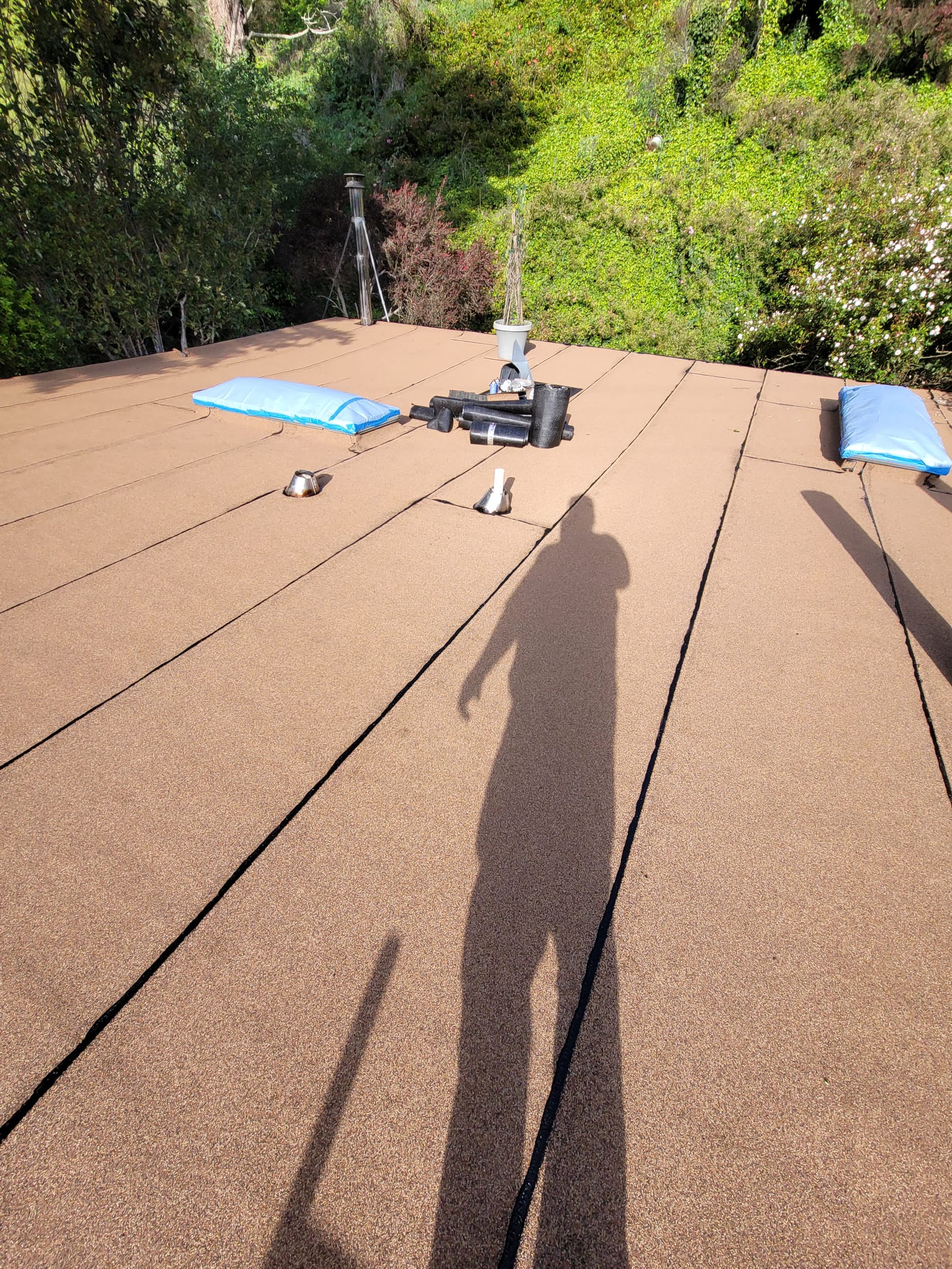
Illustrative roofing photograph from our gallery—not documentation of a specific project, location, or outcome discussed in this chapter.
A commercial roof is not an ordinary observation platform. Fall hazards, fragile surfaces, electrical equipment and changing weather can make access unsafe.
Do Not Substitute Curiosity for Training
Owners can collect interior observations and documents without going onto the roof. Leave roof access, inspection and work to properly qualified people using the applicable protection and procedures.
An existing ladder, hatch or parapet does not by itself establish that access is safe. Conditions must be evaluated for the actual work.
Coordinate the Site
Tell the contractor about restricted areas, known hazards, equipment, occupied spaces and emergency access. Clarify who controls access, who coordinates other trades and how the building's operating needs will be communicated.
Ask how the contractor will address protection, weather interruptions, material handling and end-of-day security. Do not direct workers to improvise around a hazard in order to keep a schedule.
Keep Responsibilities Explicit
- Identify the authorized site contact.
- Communicate known conditions and access restrictions.
- Coordinate equipment isolation with qualified personnel where needed.
- Keep occupants clear of restricted work and staging areas.
- Agree on how urgent hazards and changes are reported.
Question to Ask
What site information do you need from us, and who is responsible for verifying safe access and work procedures?
This article is not a safety plan, legal opinion or substitute for required training. Consult applicable requirements and qualified professionals. OSHA's official fall-protection resources provide a starting point for understanding the topic.