California Title 24 Cool Roof Requirements — What Building Owners Must Know
A Practical 2026 Guide to Code Applicability and Product Ratings
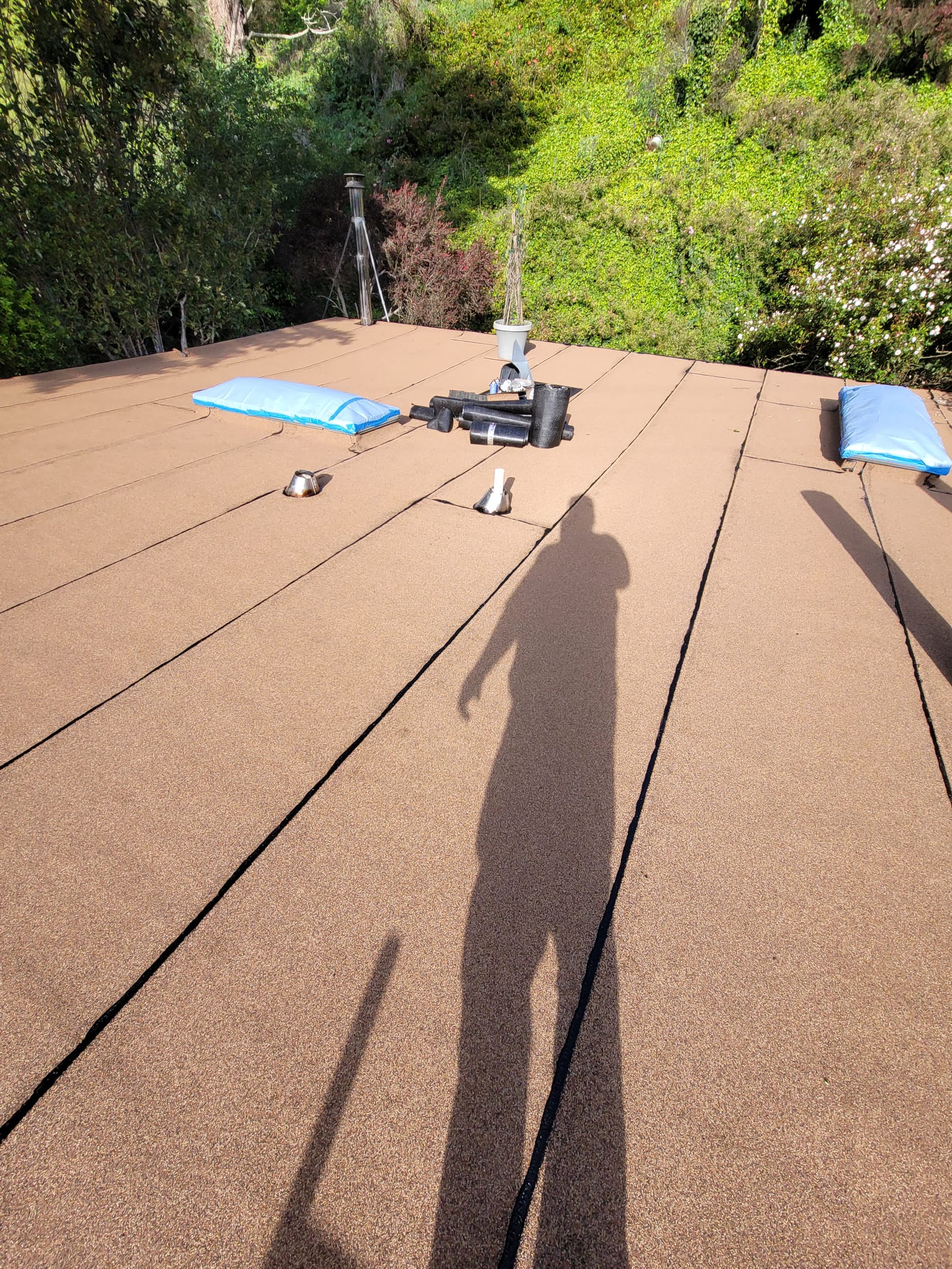
Illustrative roofing photograph from our gallery—not documentation of a specific project, location, or outcome discussed in this chapter.
Technical update: October 29, 2026. Start with the California Energy Commission's 2025 Energy Code guidance for a project planned in 2026. The applicable code edition, permit date, roof slope, climate zone, building use, alteration scope and compliance path must be checked with the project team and local building department. This is owner education, not a project-specific code determination.
Here's the plain-English version of what it requires, when it applies, and how it affects the restoration-versus-replacement decision.
What Title 24 Requires for Low-Slope Commercial Roofs
For low-slope roofs (a pitch of 2:12 or less — which describes most commercial flat roofs), Title 24's prescriptive path generally requires the roofing surface to meet minimums for:
- Aged solar reflectance — commonly a 3-year aged reflectance of 0.63 for low-slope nonresidential roofs
- Thermal emittance — typically 0.75 or higher
- Or a minimum aged SRI (Solar Reflectance Index) as an alternative — commonly 75 for low-slope
Initial solar reflectance describes a new surface; aged reflectance describes its weathered performance under the rating program. Thermal emittance describes the surface's ability to release heat, and SRI combines reflectance and emittance under defined conditions. They are not interchangeable. The relevant requirement may use an aged value or an allowed calculation; do not substitute a marketing brochure's initial value.
Requirements and exceptions differ by climate zone, building type, roof slope and compliance path. The example thresholds above are not universal specifications. Find the exact product and color in the CRRC Rated Roof Products Directory, check the current rating and match the applicable requirements. CRRC rates products: a listing is not blanket code approval, certification of an installer, or a guarantee of energy savings.
When Title 24 Is Triggered
Title 24 applies when you do qualifying work, including:
- New construction — always
- Roof replacement — tearing off and installing a new roof triggers current code
- Re-roofing or recovering — adding a new roof over an existing one generally triggers the requirements
- Significant alterations — larger roof repairs can trigger compliance for the altered area, depending on scope and jurisdiction
Routine maintenance and minor repairs typically do not trigger Title 24. Local building departments make the final call, and enforcement practices vary by city.
The Good News: Compliance Can Pay You Back
Reflective roofing can reduce absorbed solar heat and cooling demand. The site's 15–25% cooling-savings illustration is not a measured outcome for your building or a guarantee: weather, insulation, HVAC efficiency, operating hours, existing roof and energy tariffs affect results. Code compliance and financial payback are separate questions.
This matters most in hot inland climate zones. Buildings in Stockton and Tracy sit in some of the state's hottest climate zones, where cool roof compliance yields the largest energy paybacks. Even in coastal zones like South San Francisco, reflective roofs deliver measurable benefits.
How Silicone Restoration Fits In
Some silicone coating products have CRRC ratings that may support a cool-roof compliance path. Verify the exact product, color, listed aged values and complete roof assembly; a white color or a generic silicone chemistry does not establish qualification.
A properly specified restoration may be an option for a suitable existing roof, but it is not a way to bypass permit or code requirements. Moisture surveys, adhesion testing, repairs, drainage and manufacturer-approved compatibility must be addressed. Wet insulation or structural defects may require removal, replacement or additional professional evaluation.
What You Should Ask Before Signing Any Roofing Contract
- Which Title 24 requirements apply to this project, in this climate zone?
- What is the product's CRRC listing number, and what are its aged reflectance and emittance values?
- Who handles the permit and compliance documentation?
- Will the finished roof's documentation be provided for my building records?
A contractor who can't answer these crisply is learning on your building.
McCurdy Pro Tip
Keep the product listing, project-specific compliance documents, permits and closeout information in your building file. Ask who prepares and verifies each item before authorizing work. Request a free roof inspection to discuss condition and next steps.
Authoritative Sources
Confirm current requirements with the authority having jurisdiction; this chapter does not replace the applicable code or written project specification.
Apply this to your building
Use this guide to prepare questions, not to self-certify a roof. Suitability, scope and warranty terms depend on the inspected roof and written system requirements.