What Happens During a McCurdy Free Roof Audit: A Step-by-Step Walkthrough
Exactly What to Expect — Before, During, and After
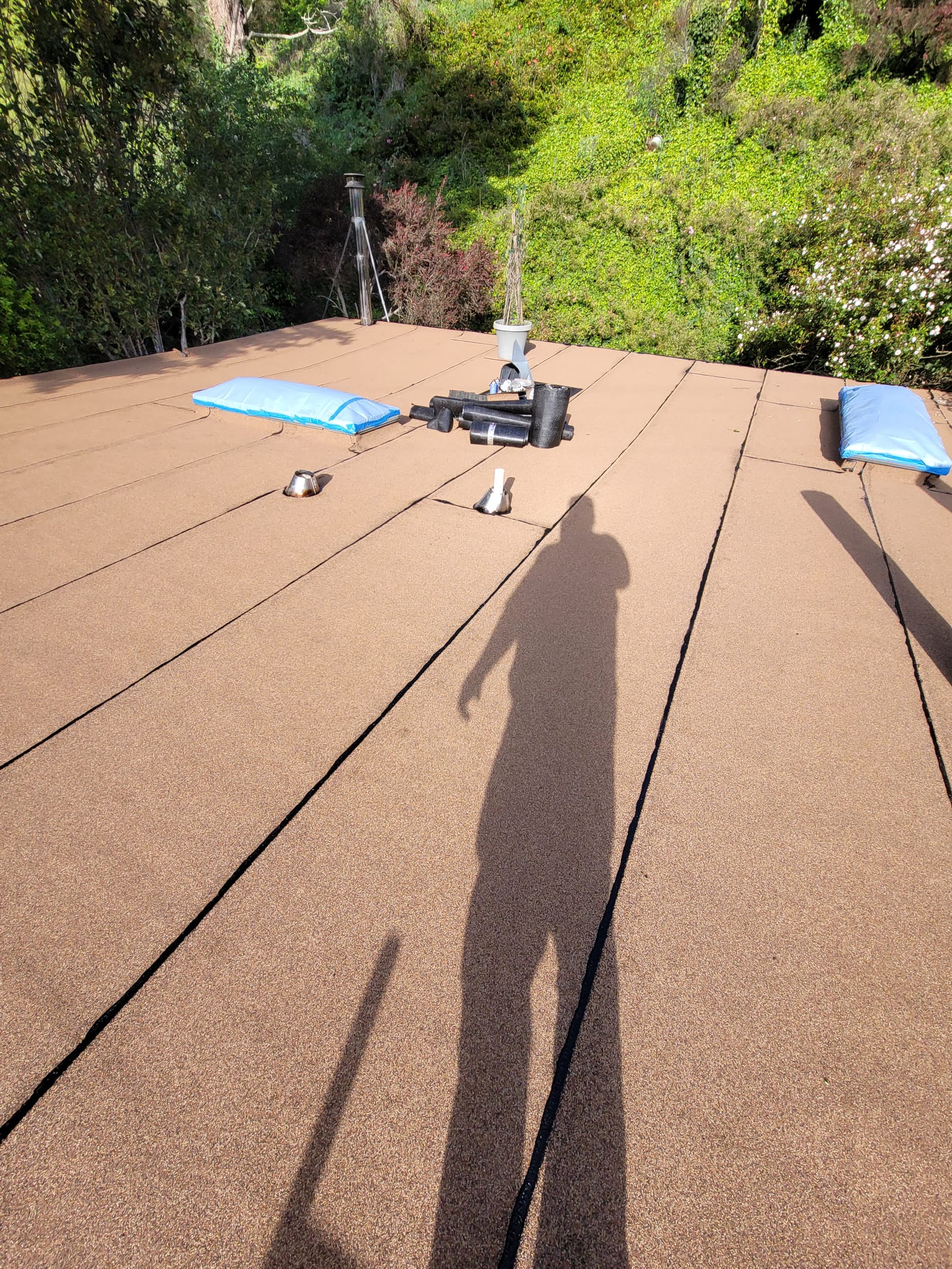
Illustrative roofing photograph from our gallery—not documentation of a specific project, location, or outcome discussed in this chapter.
Most property managers put off roof inspections for the same reason people put off dentist appointments: they're worried about what they'll hear, and they're worried the visit is really a sales pitch in disguise.
So let's take the mystery out of it. Here is exactly what happens during a McCurdy free roof audit, step by step. No surprises, no pressure, and no cost.
Step 1: Scheduling — A Five-Minute Call
You call (650) 952-0233, text (650) 808-5469, or book online. We ask a few basics: building address, approximate age, roof type if you know it (no problem if you don't), and any symptoms — leaks, stains, rising energy bills. We schedule a time that works around your operations. The audit itself typically takes 45 minutes to a couple of hours depending on roof size.
Step 2: The Walkthrough Conversation
On the day, we start on the ground with whoever knows the building — you, your facilities lead, or your tenant. We want the roof's story: Where has it leaked? What repairs have been done? Any documents from previous work? This history is often as diagnostic as anything we find on the roof.
Step 3: The Full Roof Walk
Then we get on the roof — all of it, not a quick lap near the hatch. We systematically examine:
- Field membrane — condition, aging, blisters, punctures, previous patches
- Every seam — the most common failure point on most systems
- Flashings — at walls, curbs, edges, and every penetration
- Drainage — drains, scuppers, gutters, and evidence of ponding
- Rooftop equipment — HVAC curbs, pipe supports, condensate lines dumping on the membrane
- Sealants and terminations — cracked caulk and open termination bars let water in quietly
Where conditions warrant, we assess for trapped moisture — because coating over wet insulation is malpractice, and knowing what's under the membrane changes the recommendation.
Step 4: Photo Documentation
Everything noteworthy gets photographed. You receive these photos — it's your roof, and you deserve to see what we see. For most owners, this is the first time anyone has actually shown them their own roof's condition.
Step 5: The Honest Verdict
After the walk, we tell you plainly which of four categories your roof falls into:
- Healthy — no action needed now; we'll tell you when to check again
- Repair — specific localized fixes will keep it sound
- Restore — a strong candidate for silicone restoration with an NDL warranty
- Replace — coating would be the wrong move; the roof needs replacement
Yes, we say "healthy" and "replace" regularly. Our NDL warranties — with zero unresolved claims in company history — only work because we refuse to coat roofs that shouldn't be coated.
Step 6: The Written Assessment
Within a few days you receive a written summary: findings, photos, our recommendation, and — only if restoration or repair makes sense — a detailed quote with the warranty term stated in writing. Then the decision is yours, on your timeline. No follow-up pressure campaign.
Why We Do This Free
Simple economics: since 1985, over 10,094 completed services have taught us that informed building owners become long-term customers. Some audits lead to work this year; many lead to a phone call three years later that starts with "you looked at our roof a while back." Both outcomes are fine with us.
We run audits every week across the region — office parks in Sunnyvale, warehouses in Hayward, and distribution facilities in Manteca.
McCurdy Pro Tip
Get an audit before the rainy season, not during it. October's calendar fills fast when the first storms find every neglected roof in Northern California. A dry-season audit means you can plan repairs on your schedule with time to spare. Book your free roof audit — it costs nothing, and the photos alone are worth having in your building file.
Apply this to your building
Use this guide to prepare questions, not to self-certify a roof. Suitability, scope and warranty terms depend on the inspected roof and written system requirements.