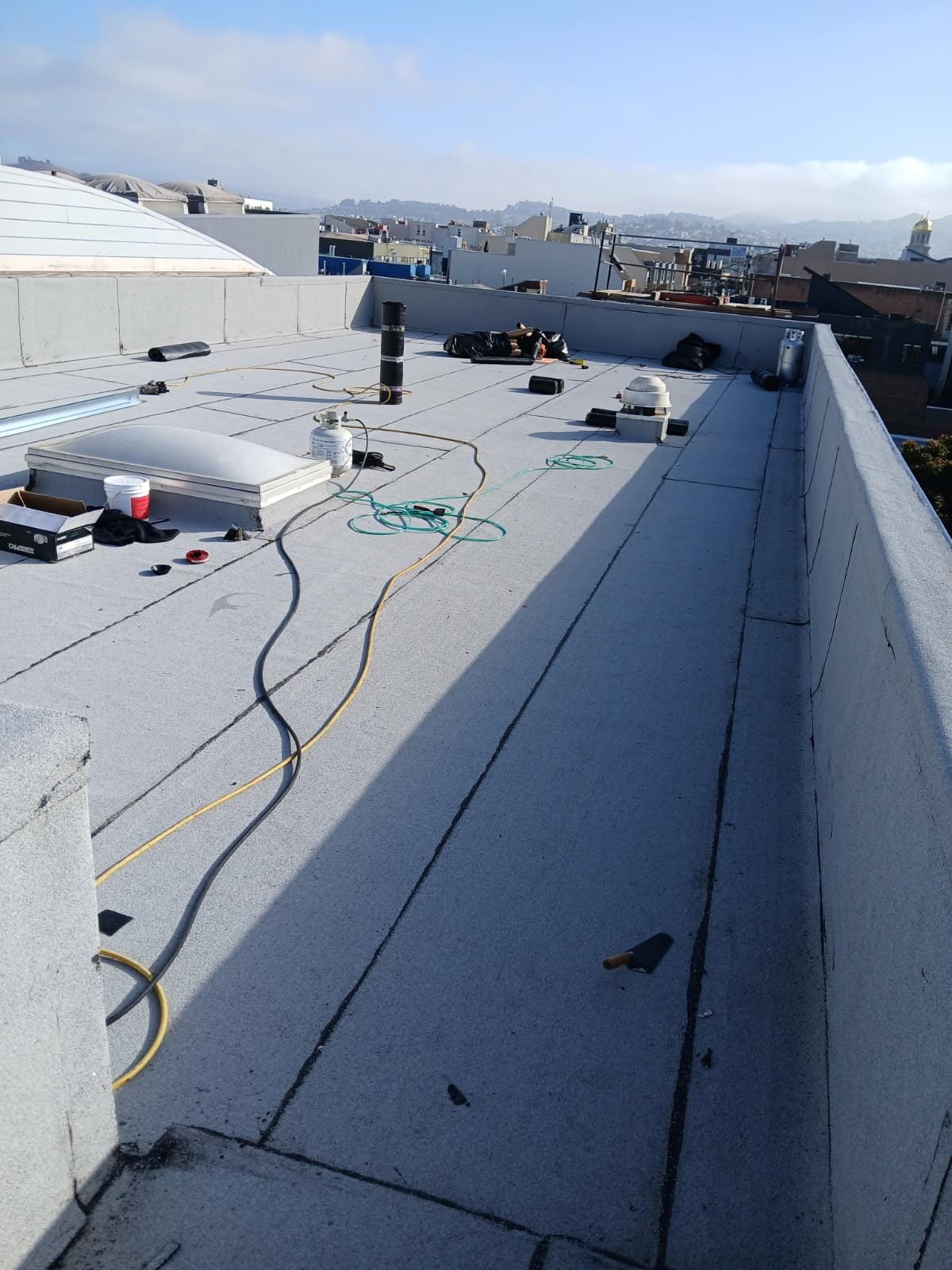
Low-VOC silicone restoration
Best for: occupied medical buildings
A seamless exterior membrane addresses aged field areas, parapets, drains, and mechanical penetrations without a full tear-off.
Silicone roof systems for hospitals, research labs, and life science campuses — zero-tolerance waterproofing for facilities where a leak is never acceptable.
4–7 yrs
Energy performance, deferred replacement capital, and deductions influence the project economics.
Low-VOC
Exterior-applied systems can be specified with product documentation for facilities teams.
Up to 30
Warranty terms depend on the existing assembly, preparation, and selected manufacturer system.
10,094+
McCurdy's current company-wide service milestone across Northern California.
System Options
The right specification depends on the existing roof assembly, moisture findings, drainage, and operating requirements. McCurdy assesses those conditions before recommending a system.
Best for: occupied medical buildings
A seamless exterior membrane addresses aged field areas, parapets, drains, and mechanical penetrations without a full tear-off.
Best for: dense rooftop equipment
Detailed treatment around HVAC curbs, conduits, and equipment supports targets the leak paths common on medical and laboratory roofs.
Best for: multi-building facilities
Buildings can be assessed and sequenced by condition, patient-care priorities, access, and facilities scheduling.
Case Study
Representative Bay Area life-science profile
Occupied medical or research campus with multiple buildings, dense rooftop HVAC, and sensitive interior spaces.
Plan a Similar ProjectThe challenge
The facilities team needed to reduce leak risk without compromising patient care, laboratory operations, indoor-air requirements, or equipment access.
The approach
McCurdy's assessment documented moisture, penetrations, access constraints, and building priorities before sequencing a low-disruption, reinforced restoration program.
The outcome
The campus received a building-by-building roadmap, documented system recommendation, and maintenance record that supports facilities and risk-management planning.
More Building-Specific Resources
Hospitals, Research Labs, and Life Science Campuses
No building type has less tolerance for roof failure than a hospital or life science facility. A leak over a sterile processing room, a lab, or a data center can trigger equipment damage, regulatory citations, and patient safety events. The roof system must perform with absolute reliability — not just at installation, but across the full warranty horizon.
Silicone is the coating system of choice for medical and life science facilities because it eliminates the seam-related failure modes that plague conventional membrane systems. Applied as a fluid coating, it cures into a single continuous membrane across the entire roof deck — including every mechanical penetration, drain, and parapet detail.
In the Bay Area's life science corridor — from South San Francisco biotech campuses to San Jose medical centers — McCurdy delivers NDL-warranted systems with the documentation packages that facility managers, OSHPD reviewers, and risk managers require.
What We Solve
A water intrusion event in a hospital, lab, or life science facility can damage sensitive equipment, contaminate sterile environments, or trigger regulatory citations. McCurdy's seamless silicone system eliminates the seams, laps, and aged flashings where leaks originate.
Medical and life science buildings typically have more rooftop mechanical equipment per square foot than any other building type. Our reinforced detail work addresses every curb, conduit, and penetration — not just the field membrane.
Hospitals and laboratories operate under strict indoor air quality standards. McCurdy uses low-VOC silicone formulations. Application is to the exterior only, and we can work around building intake schedules and HVAC shutdowns required during application.
Medical campuses are typically occupied around the clock and involve multiple buildings at different ages and conditions. McCurdy develops phased restoration programs that sequence buildings by condition and priority without disrupting patient care or laboratory operations.
Bay Area Life Science & Medical Corridor
McCurdy serves hospitals, research campuses, and life science facilities throughout the Bay Area.
Common Questions
McCurdy has experience on occupied medical campuses. We work with facility management teams to schedule work around patient care priorities, HVAC intake windows, and building commissioning events. Phased application can spread the work across multiple visits to minimize impact at any single time.
We provide a complete documentation package including: product SDS sheets, specification submittals, application records, infrared scan report, manufacturer warranty, and a signed letter of compliance with all applicable California codes. This package is formatted for OSHPD and Joint Commission facility audits.
In most cases, yes. McCurdy's assessment confirms substrate adhesion, existing moisture content, and membrane condition. Silicone is compatible with the major single-ply systems when properly primed. We will not apply over a substrate that fails moisture testing.
We coordinate with your facilities team and the relevant equipment vendors. Solar panel arrays are worked around (and often benefit from a freshly sealed roof membrane). HVAC penetrations receive reinforced silicone details that are tested for watertightness before project closeout.
Payback depends on the building's cooling demand, insulation, roof condition, utility rates, and installed scope. Compare an itemized restoration proposal with replacement and maintenance alternatives rather than assuming a fixed payback period. Section 179D ended for property whose construction begins after June 30, 2026; have your tax advisor assess any earlier qualifying project separately.
McCurdy delivers a written system recommendation, infrared scan report, and full documentation package — at no charge, no obligation.