The Roofing Problem Nobody Talks About at Silicon Valley Tech Campuses
San Jose and Silicon Valley's tech, semiconductor, and data center roofs carry more rooftop equipment than almost any other building type in California. A third-generation roofing contractor explains why that changes everything.
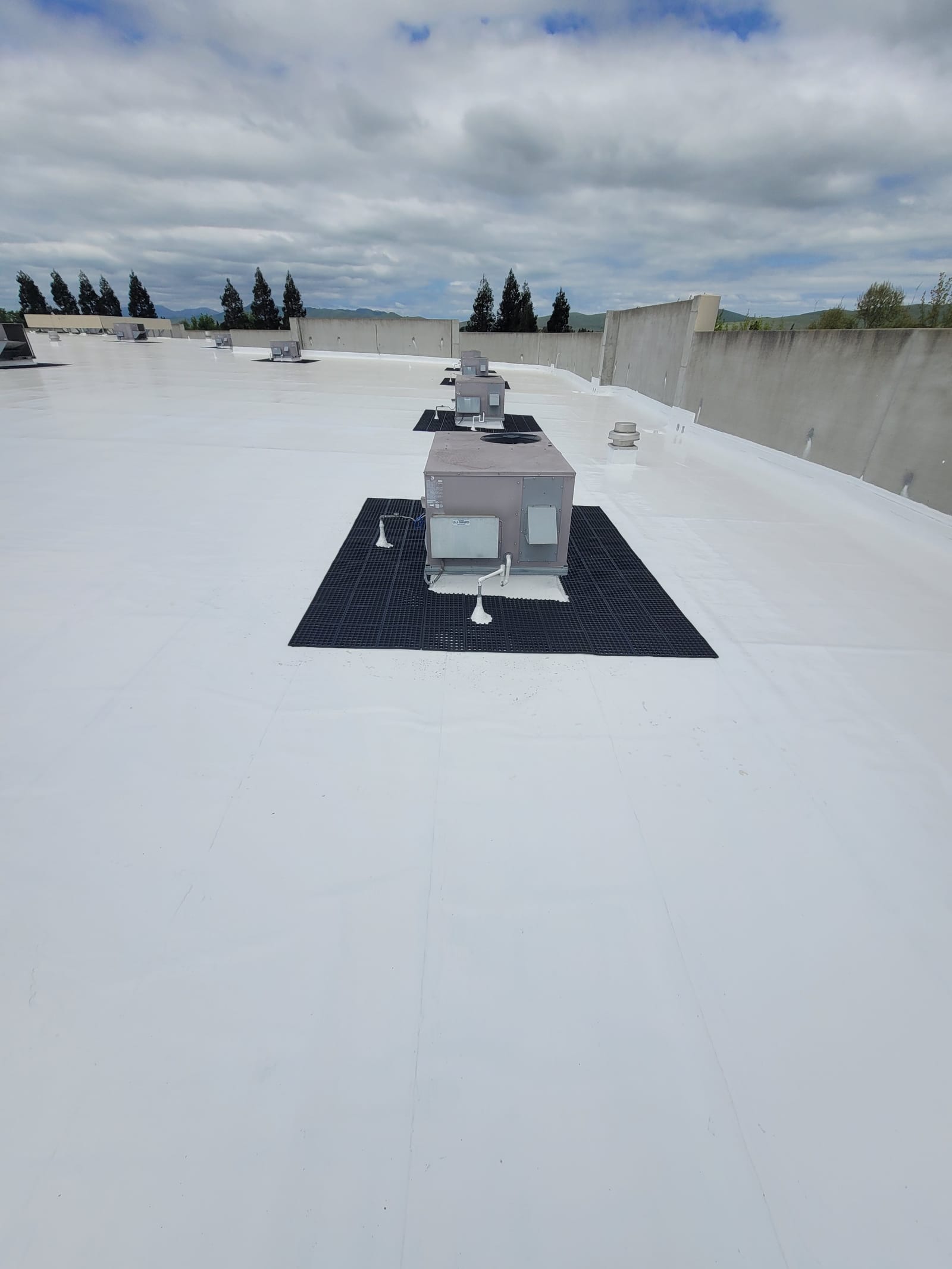
Most people picture Silicon Valley's rooftops as sleek and modern, matching the buildings underneath them. What we actually find up there is different: densely packed HVAC units, cooling towers, exhaust systems, solar arrays, and communications equipment, often crammed onto a single roof in numbers you rarely see outside a data center or semiconductor cleanroom facility. Every one of those is a penetration through the membrane, and every penetration is a place water can eventually find its way in.
That's the roofing problem nobody talks about in San Jose, Sunnyvale, Santa Clara, and Milpitas. It's not really about weather. It's about how much equipment is sitting on top of the roof, and whether the membrane underneath it was built to handle that load.
Why Tech and Semiconductor Roofs Age Differently
Santa Clara County's climate itself is fairly moderate compared to what we see out in the Central Valley — warmer than the San Mateo County fog belt, but nowhere near the extremes of Modesto or Stockton. Left alone, a roof here could actually last longer than in most other counties we serve.
The problem is what's built on top of it. Data centers and semiconductor facilities in particular run enormous rooftop cooling infrastructure around the clock, generating constant vibration, heat cycling around individual units, and dozens or hundreds of individual seals that each represent a potential failure point. Office and R&D campuses carry fewer units but still significantly more than a typical commercial building. Every additional curb, pipe, and duct is a place where a standard roofing system was cut, sealed, and left to age independently from the rest of the roof.
Why a Monolithic Coating Matters More Here Than Almost Anywhere
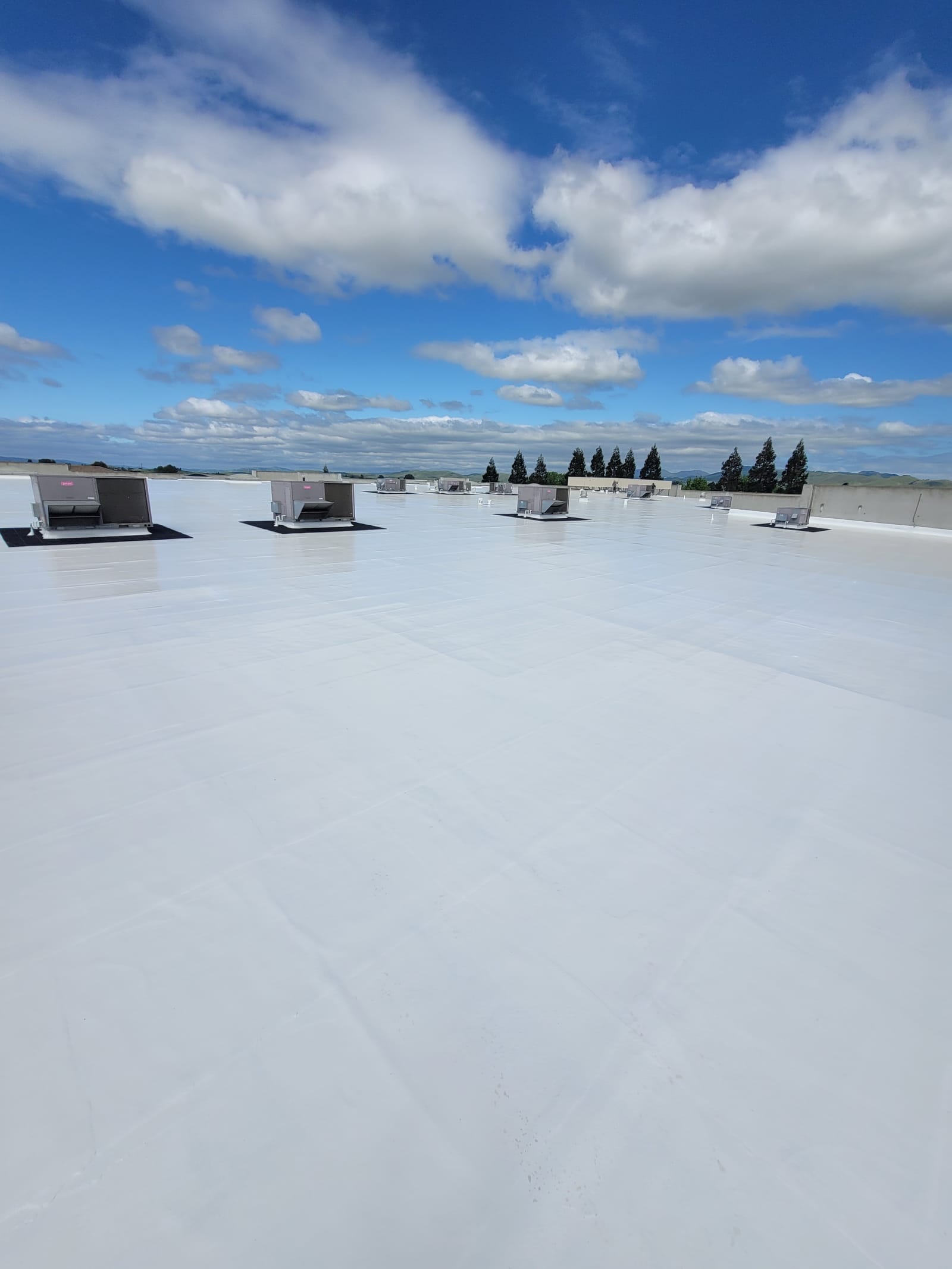
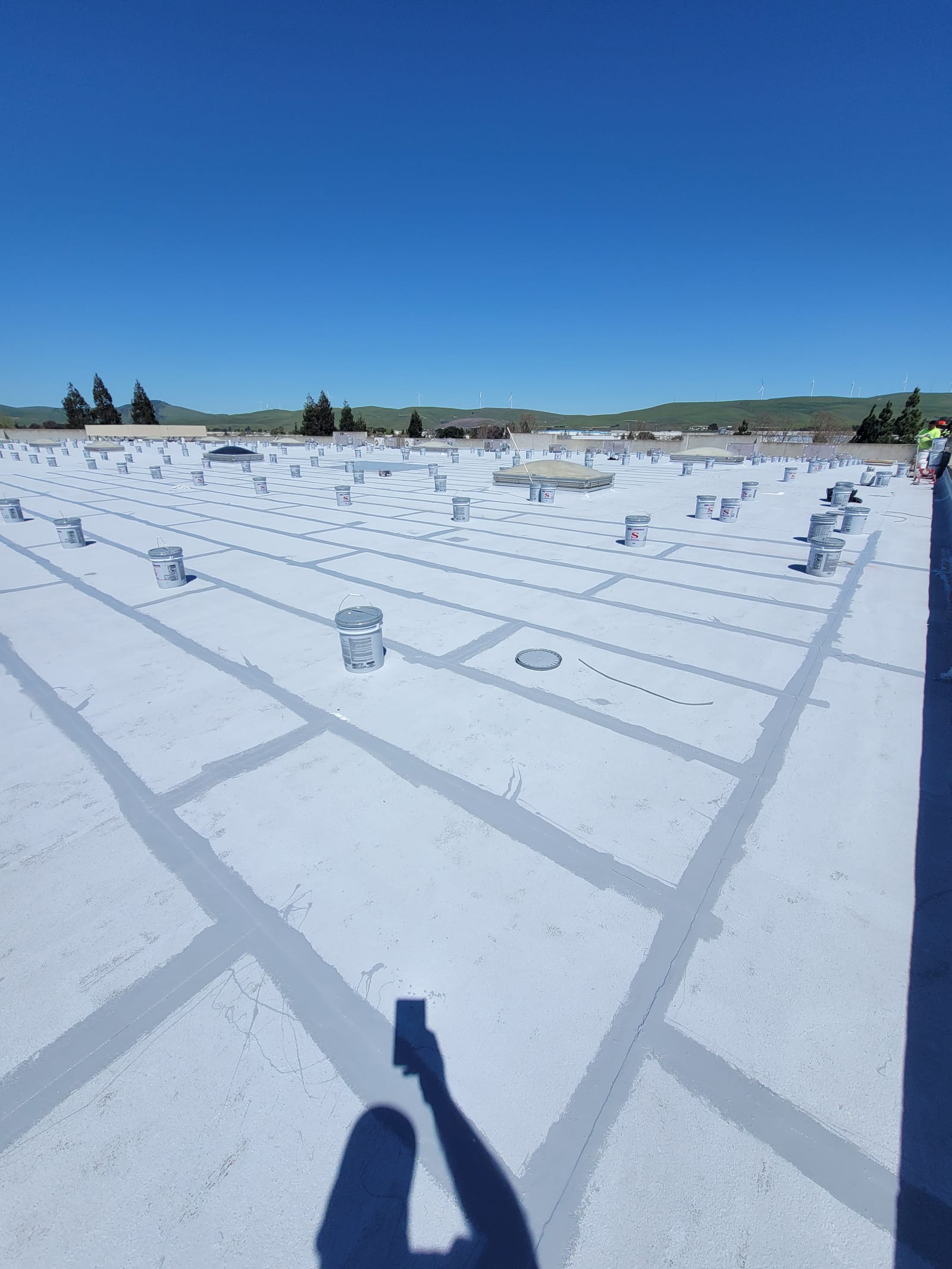
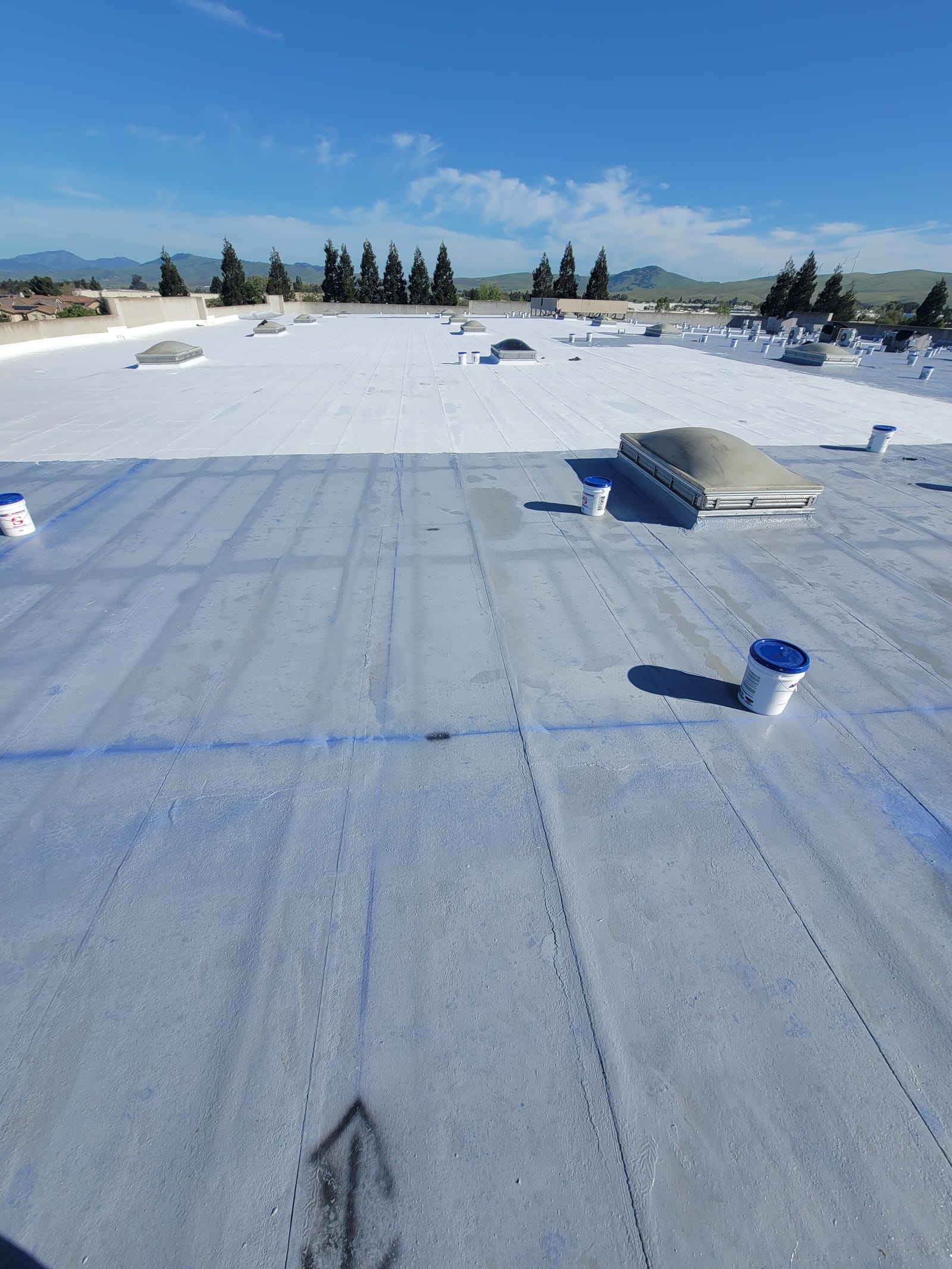
On a roof with this much equipment, the biggest risk isn't the field of the roof — it's the hundreds of individual flashing details around every penetration. A traditional built-up or single-ply system relies on individually sealed penetrations, each one a potential future leak. A silicone restoration coating instead creates one continuous, seamless membrane across the entire roof, penetrations included, which eliminates the weakest point in most rooftop equipment-heavy buildings.
This matters even more for facilities where a roof leak isn't just an inconvenience — it's a risk to servers, cleanroom environments, or sensitive manufacturing equipment below.
Restoration vs. Replacement for High-Equipment Roofs
The instinct when a roof starts showing age is to assume it needs full replacement. For most equipment-heavy roofs we inspect, that's both the more expensive option and the more disruptive one — tearing off a roof with this much rooftop infrastructure means temporarily relocating or shutting down critical systems, which most data centers and semiconductor facilities simply can't do. Silicone restoration, applied directly over the existing system:
- Seals every seam and penetration in one continuous pass, addressing the actual weak point on equipment-dense roofs
- Reflects solar heat, reducing thermal load on rooftop cooling systems that are often already running at capacity
- Requires no equipment relocation or facility shutdown during application
- Extends roof life 15-30 years depending on system and mil thickness
A full tear-off on a facility like this typically costs several times what restoration runs per square foot, before counting the operational cost of temporarily disrupting rooftop equipment. That said, if the roof deck itself has failed structurally, restoration isn't a substitute for a real fix — and we'll tell a facilities manager that directly rather than coat over a problem that needs replacement.
What "NDL" Actually Means
NDL stands for No Dollar Limit. If a covered issue comes up during the warranty period, the manufacturer pays 100% of the repair cost, with no depreciation reducing that coverage over time. Most contractors cap out around 15-20 years of NDL coverage. McCurdy Coatings is among a select group of Northern California contractors holding ASC and Tropical Coatings 30-year NDL certifications, verified with core samples that exceed required mil thickness by 30-100% on every job.
A Quick Gut-Check for Facilities Managers
- Any staining or moisture around rooftop HVAC curbs, cooling towers, or equipment mounts
- Ponding water anywhere on the roof more than 48 hours after rain
- Rooftop cooling systems running longer or harder than they used to
- A roof over 10 years old with dense equipment and no coating history
Three Generations, One Standard
McCurdy Roofing has been a family business since 1985. Three generations in, our reputation has been built on telling clients the truth about their roof — not the version that makes us the most money. We regularly serve San Jose, Santa Clara, Sunnyvale, Milpitas, Mountain View, Cupertino, and the broader South Bay tech and industrial corridor.
If your facility's roof carries the kind of equipment load we're describing here, a free assessment costs nothing and tells you exactly where the vulnerable points actually are.
Call (650) 952-0233 to schedule your free Santa Clara County roof assessment.
Ready to apply this to your building?
Get a free, no-obligation assessment from McCurdy's expert team.
Schedule Free InspectionService Areas We Cover in This Region
Ready to Protect Your Investment?
Get a free roof assessment from Bay Area's most trusted commercial coating contractor.