Why Contra Costa County's Refineries and Industrial Roofs Age Differently Than You'd Think
From Richmond's refinery corridor to Concord's inland heat, Contra Costa County puts commercial roofs through two completely different climates. A third-generation roofing contractor explains what that means for your building.
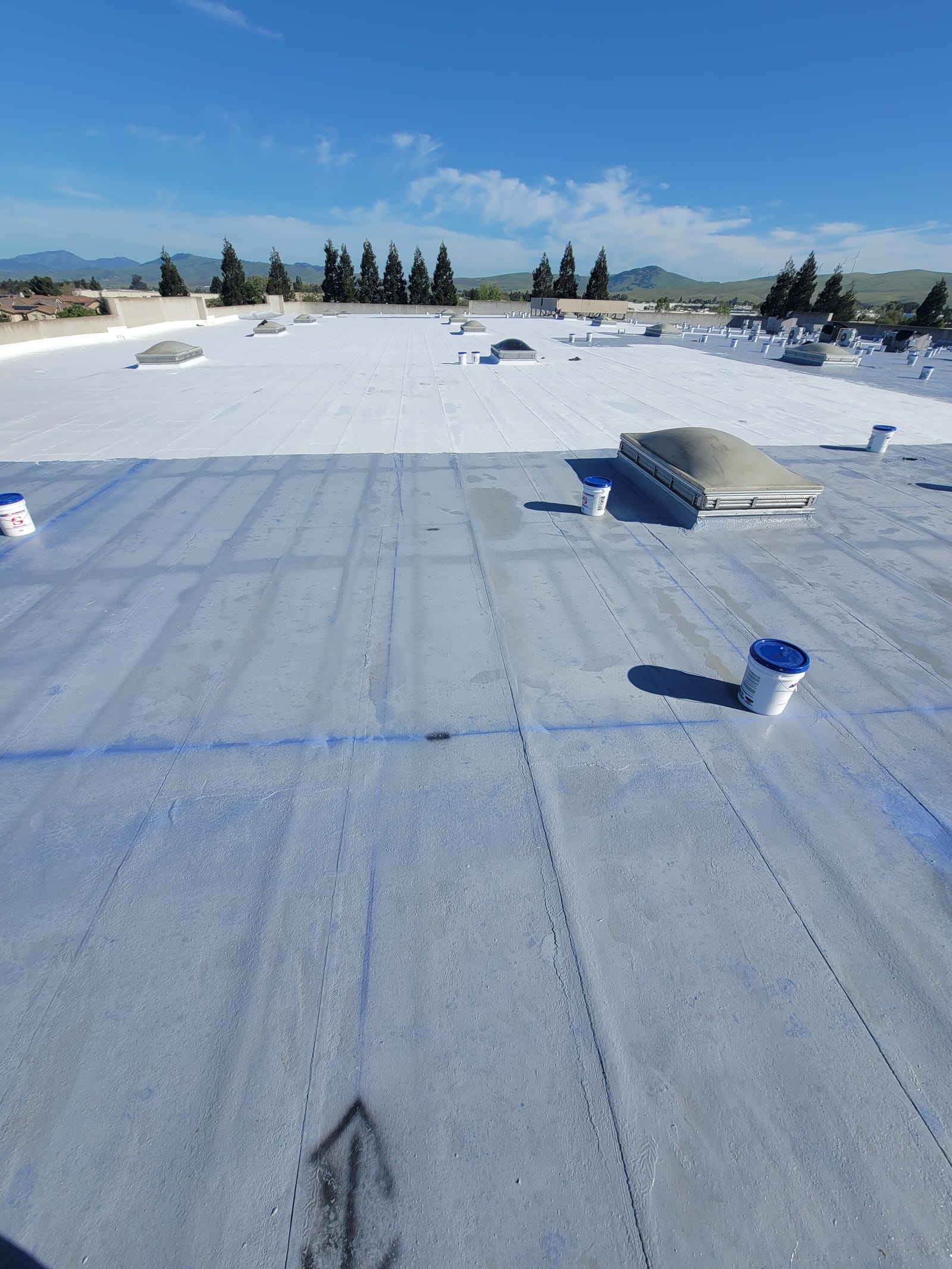
Contra Costa County is one of the strangest climates I work in, and I mean that as a roofer, not a meteorologist. Drive from Richmond to Concord and you cross from cool, salt-air Bay influence into inland Central Valley-style heat, sometimes in the same afternoon. That split matters more than most building owners realize, because it means two roofs 20 miles apart in the same county can fail for completely different reasons.
Two Climates, One County
The Bay-influenced corridor — Richmond, San Pablo, Pinole, Hercules — deals with salt air, fog, and higher humidity. That combination is brutal on metal fasteners, flashing, and any exposed hardware, and it slows drying time after rain, which means ponding water sits longer than it would inland.
The inland corridor — Concord, Walnut Creek, Antioch, Pittsburg, Brentwood — runs 15-20 degrees hotter in summer, with UV exposure and thermal cycling that mirrors what we see out in the Central Valley. Roofs here age from heat stress, not moisture.
Then there's the industrial belt along the county's northern edge — refineries, chemical processing, and heavy manufacturing in Richmond, Martinez, and Rodeo — where roofs face corrosive vapor exposure on top of everything else. A roofing system that works fine in Walnut Creek can fail fast next to a refinery in Martinez, and vice versa.
Why a One-Size Roofing Approach Doesn't Work Here
I've seen contractors quote the exact same system for a Walnut Creek office park and a Richmond industrial facility, and it's a mistake every time. The industrial and refinery-adjacent buildings need coating systems with real chemical resistance, not just weatherproofing. The inland buildings need maximum reflectivity to fight heat gain. The bay-side buildings need a system that handles constant moisture cycling without trapping water underneath.
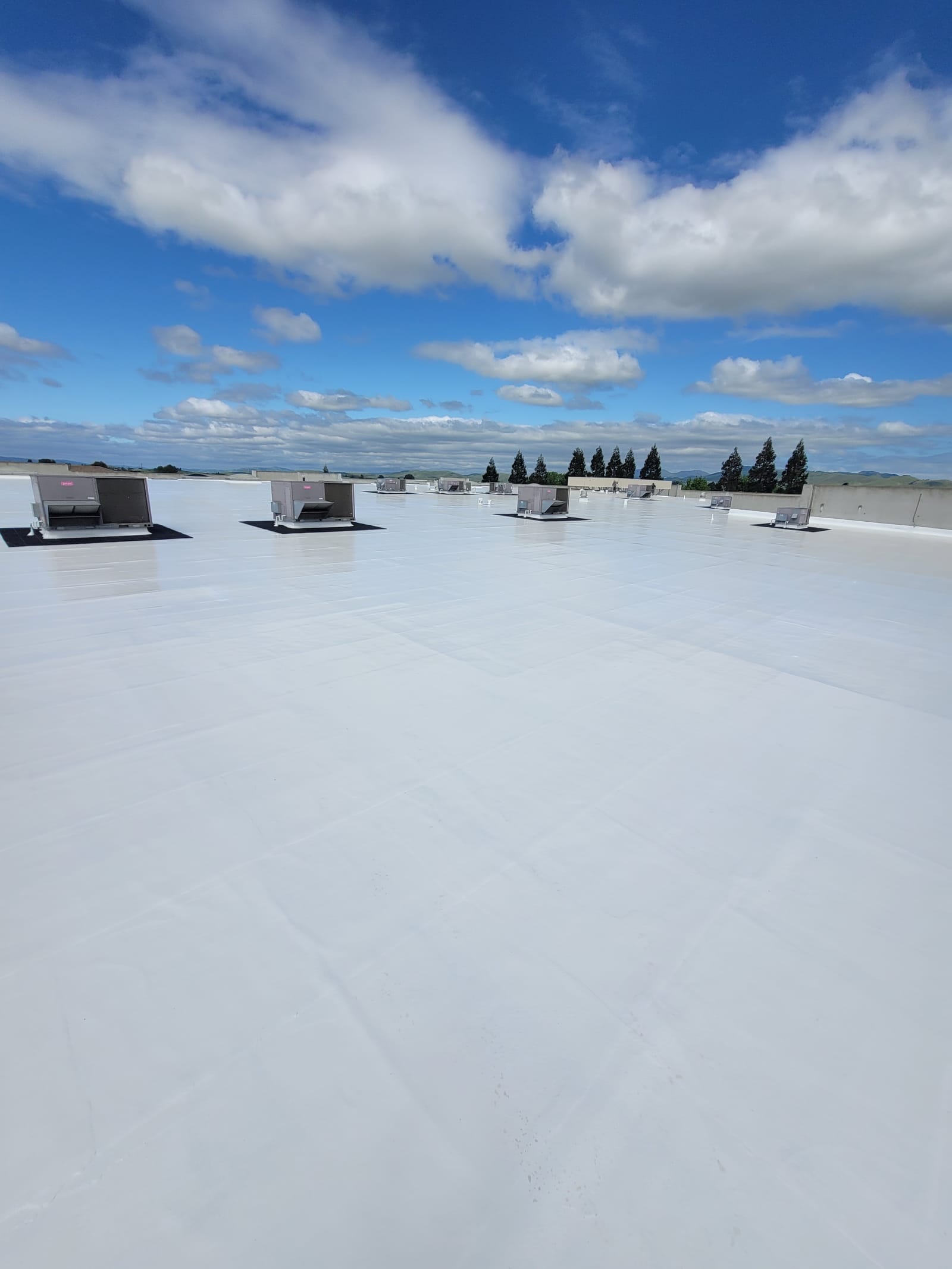
Silicone restoration coatings actually cover all three cases well, which is part of why they've become the default recommendation across the county — but the mil thickness and prep work should be adjusted based on which of these three environments a building actually sits in.
The Restoration-vs-Replacement Question
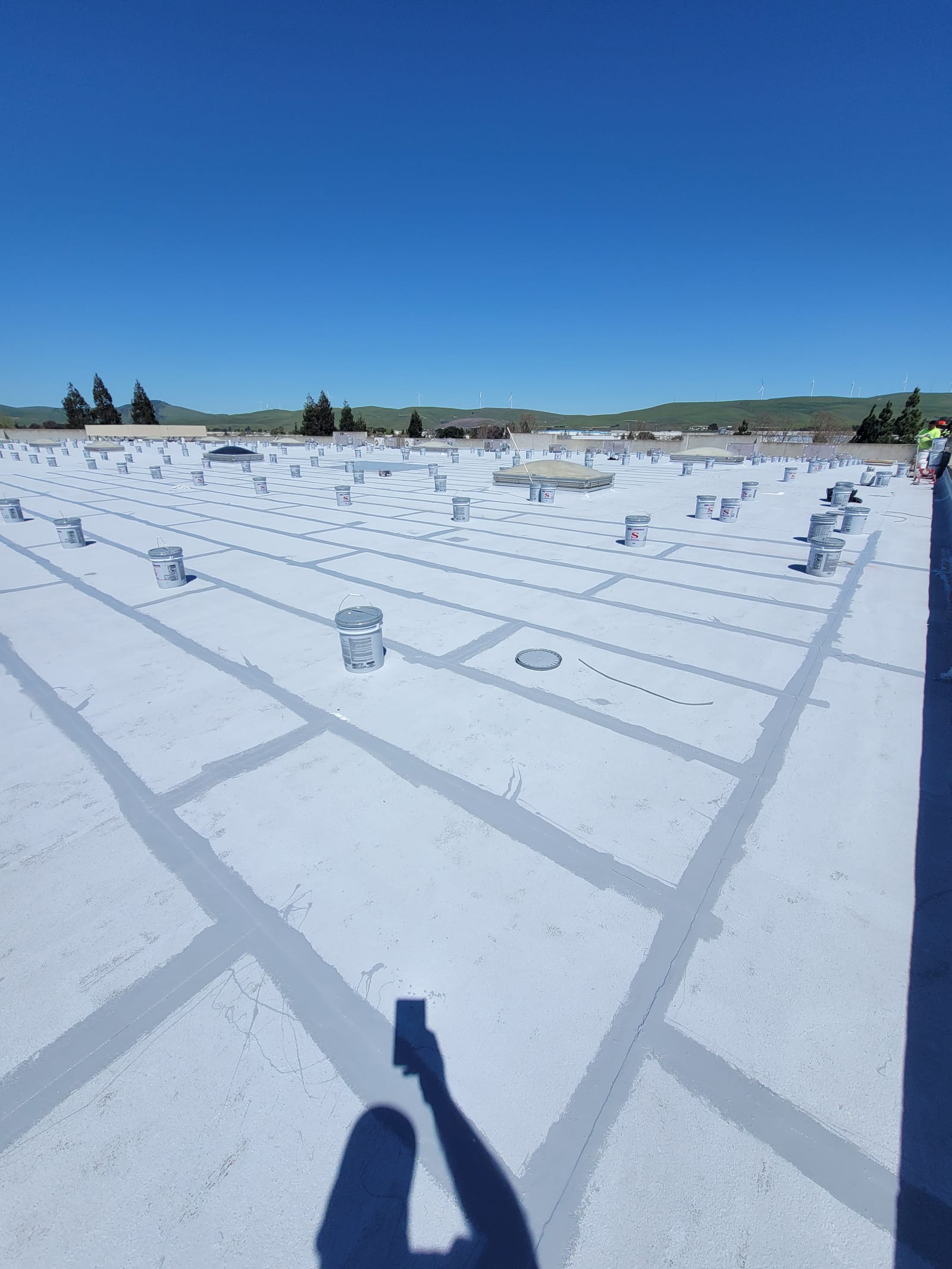
The instinct when a roof starts failing is to assume a full tear-off. That's usually the more expensive and more disruptive option, and for most roofs we inspect, it's not the necessary one. Applied directly over most existing systems, silicone restoration:
- Reflects solar heat instead of absorbing it — critical for the inland heat corridor
- Seals seams, flashing, and penetrations, which matters most for the bay-influenced towns dealing with constant moisture
- Adds chemical and vapor resistance suited to industrial and refinery-adjacent sites
- Extends roof life 15-30 years without demolition or landfill waste
A full commercial tear-off typically costs several times what restoration runs per square foot, before counting downtime. That said, if the roof deck itself has failed structurally — which we do see more often near the refinery corridor due to corrosive exposure — restoration isn't the answer, and I'll tell you that directly rather than coat over a problem that needs a real fix.
What "NDL" Actually Means
NDL stands for No Dollar Limit. If something covered goes wrong during the warranty period, the manufacturer pays 100% of the repair cost, with no depreciation reducing that coverage over time. Most contractors cap out around 15-20 years of NDL coverage. McCurdy Coatings is among a select group of Northern California contractors holding ASC and Tropical Coatings 30-year NDL certifications, verified with core samples that exceed required mil thickness by 30-100% on every job.
A Quick Gut-Check for Building Owners
- Ponding water that takes more than 48 hours to drain after rain
- Visible blistering, cracking, or corrosion around metal flashing and fasteners
- Rising energy bills that don't match usage patterns
- A roof over 10 years old with no coating or restoration history
Three Generations, One Standard
McCurdy Roofing has been family-owned since 1985. Our reputation across three generations has been built on telling clients the truth about their roof — not the version that makes us the most money. We regularly serve Concord, Walnut Creek, Richmond, Antioch, Pittsburg, Martinez, Brentwood, and San Ramon, and we adjust our approach based on which climate zone of the county your building actually sits in.
If your roof hasn't been assessed recently, a free inspection costs nothing and tells you exactly where you stand.
Call (650) 952-0233 to schedule your free Contra Costa County roof assessment.
Ready to apply this to your building?
Get a free, no-obligation assessment from McCurdy's expert team.
Schedule Free InspectionService Areas We Cover in This Region
Ready to Protect Your Investment?
Get a free roof assessment from Bay Area's most trusted commercial coating contractor.